Archive for March, 2011

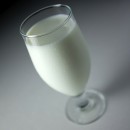
Raw Milk 101

There is a lot of controversy surrounding Raw Milk, and I am passionate about discussing this topic with you!

Pasteurized Milk versus Raw Milk

The pasteurization process is when the milk is heated to 150 degrees for at least a half hour and then reducing the temperature. This process accomplishes two things; First, it kills the bacteria and nutrients out of the milk, and secondly, it transforms the physical structure of the milk protein to prevent the milk from souring.

The pasteurization process destroys good bacteria and digestive enzymes. Because the important nutrients are gone, companies fortify their milk with vitamins and minerals.

Another effect of the pasteurization process, is that the milk’s natural sugar, called lactose, turns into beta-lactose. Ever heard of “lactose intolerance”? Someone who is lactose intolerant is unable to digest the beta-lactose found in milk products. Interestingly enough, someone who is lactose intolerant is able to drink raw milk without any adverse effects.

I have personally read about this “theory” for years, but I wanted to find out for myself whether this was actually true. I had my husband, who is lactose intolerant, drink a cup of raw milk. He was admittedly nervous about a possible reaction, but drank the raw milk anyways. To his surprise, he had no issue with drinking the raw milk! The next day, he had another cup of raw milk. Still no problems! The reason he had no issues is because the natural digestive enzymes in raw milk weren’t heated out of the milk, and he was able to digest it just fine.

Raw Milk for consumption comes from grass fed cows (no grains) that are not given any hormones of any kind. The milk from these cows do not go through pasteurization or homogenization processes, and all of the beneficial bacteria, enzymes, amino acids, and vitamins are present.

Is Raw Milk Safe?

Almost any food source poses a possible risk of getting someone sick, so there is a possibility of becoming sick from drinking contaminated raw milk. Fortunately, the risk of getting sick from raw milk is very small. Let me explain the two types of raw milk to understand the risk.

The dairy cows used to produce the pasteurized milk sold in the United States are fed grains, given hormones, and are raised in very unsanitary conditions. These conditions affect the cow’s health and the quality of their milk. These factory farming conditions are the reasons why the milk has to be pasteurized in the first place. If this milk wasn’t pasteurized, it wouldn’t be safe to drink.

Organic farms that allow their cows to roam freely and eat grass (which is much healthier for them), they produce milk that is safe to drink without the pasteurization process. In addition to this, the milk coming from these cows must meet or exceed pasteurized milk standards without ever pasteurizing the milk.

The FDA is trying to ban raw milk, saying that it is unsafe for consumption, yet their is no evidence to back this claim up. I have heard about more salmonella outbreaks coming from peanut butter than I ever have from raw milk.

Here is an excerpt from the Weston A. Price Foundation website, which further explains my point:

Except for a brief hiatus in 1990, raw milk has always been for sale commercially in California, usually in health food stores, although I can remember a period when it was even sold in grocery stores. Millions of people consumed commercial raw milk during that period and although the health department kept an eagle eye open for any possible evidence of harm, not a single incidence was reported. During the same period, there were many instances of contamination in pasteurized milk, some of which resulted in death.

Why Raw Milk is Illegal in some states

Public health officials have warned consumers that raw milk poses the risk of transmitting bacteria, such as salmonella. Their concern has given them their rationalization for pasteurizing the milk. The pasteurization process extends the milk’s shelf life, making it much more profitable for the dairy industry.

As more consumers are realizing the benefits of raw milk over pasteurized, one would think the dairy industry would follow suit and meet the new demands. Unfortunately, because of the conditions of their farms, they simply cannot produce raw milk that would be safe for consumption. They would have to have more land for their cows to roam freely. They would have to allow the cows to develop naturally rather than giving them growth hormones to speed up the process of milk production. The factory farms would have to make a lot of changes. They rely a lot on the pasteurization process, since it allows them to produce more milk in less amount of time, which means more money.

It all comes down to this: The reason for the ban is based on profit rather than safety.

Campaign for Real (Raw) Milk

Protect your right to choose raw dairy! You can help by joining the Raw Milk Campaign, which is a project created by the Weston A. Price Foundation.

If you would like to benefit from raw milk, you can find raw milk that is from healthy and clean cows that are grass fed.

Everyday you are voting. How? You vote with your pocket book.

Feel free to follow us, however you like: Google+, FacebookTwitter, Pinterest

Tags: , , , , , , ,

Develop a Strong Core

Your core provides the foundation for movement throughout your entire body. The core muscles consist of the abdominals, hips, and lower back.

Benefits of a Strong Core

In addition to having a firm midsection, there are plenty of reasons why you should work on developing your core muscles.

Lower back pain affects nearly 80% of the adult population, which often times is a result from having weak core muscles. It makes logical sense to assume that if you strengthen your core muscles, you will decrease back pain. According to researchers at the California State University, people who followed a ten week core workout program experienced 30% less back pain compared to before they started the program.

A stronger core means you can lift heavier weights. Your core helps to support your spine, which allows for your entire body to be more structurally sound and more stable for lifting heavy loads.

Weak core muscles will cause you to have a forward lean, so strengthening your core will help with creating better posture.

A Canadian study (with more than 8,000 participants!) showed that in over 13 years, those with the weakest abdominal muscles (part of the core!) had a death rate of more than twice that of the people with the strongest abdominals. Interesting.

Exercises to Strengthen your Core

I don’t recommend crunches, especially if you are trying to obtain a flat midsection. Researchers at the University of Virgina found that you would have to do 250,000 crunches to burn just one pound of fat. I’ll let you do that math on that one. Bottom line, crunches aren’t going to give you a six pack. For the midsection and strong core of your dreams, stick to core exercises that work multiple muscle groups for maximum results.

I have listed some exercises that will strengthen your core. Pick a couple of them to add to your exercise routine, and enjoy the benefits of a stronger core!

• Plank – Start to go in a pushup position, but bend your elbows and rest your weight on your forearms. Allow your body to form a straight line from your shoulders to your ankles (don’t elevate your glutes). Hold this position for 30 seconds, as you contract your abdominals. You can also try doing the side plank for variation and strengthening side muscles.

• Prone Cobra – Lie down with your stomach on the floor with your legs straight and your arms next to your side with palms down. Raise your head, chest, arms (thumbs pointing up towards the ceiling), and legs off of the floor by activating your glutes and lower back muscles. Hold this position for 30 to 60 seconds.

• Swimming – Try swimming free style to strengthen your core, in addition to your entire body.

• Leg Lowering Drill – Lie down on the floor, face up, with your arms straight out in a “T” shape. While keeping your feet together, raise your legs while slightly bending your knees. Slowly move your feet down as close to the floor as you can. Touch the floor and raise your feet back into the starting position and repeat for desired repetitions. Be sure to press your lower back into the floor as you perform the movement, to prevent arching your back.

• Russian Twist – Sit down on the floor with your knees bent and feet flat on the floor. Hold your arms straight out in front of your chest with your palms together. Lean back, so that your torso is at a 45 degree angle to the floor, or half way down to the ground. Rotate slowly as far as you can to the right, then slowly rotate as far as you can to the left. This is a great workout that emphasizes your obliques.

• Yoga- There are plenty of yoga positions to try, but most of the focus on strengthening your core.

• Overhead Dumbbell Side Bend – Stand up straight and hold a pair of dumbbells over your head, with your arms straight and in line with your shoulders. Slowly bend directly to your left side as far as you can, without twisting your upper body. Pause before returning to an upright position, then bend to your right side. Alternate back and forth for desired repetitions.

• Hip Crossover – Lay on the floor, face up with your arms straight out from your sides (palms facing up), making a “T” shape. Raise your legs off the floor so your hips and knee are bent 90 degrees. Slowly move your legs to the right as far as you can, without lifting your shoulders off of the floor. Slowly reverse the movement and move your legs to the left. Continue to alternate for desired repetitions.

Bonus Tip: To help promote a flat stomach, avoid processed sugars.

Feel free to follow us, however you like: Google+, FacebookTwitter, Pinterest

Tags: , , , , , , , ,

Olive Garden’s Healthy Salmon Dinner

Sometimes, it’s just nice to enjoy a dinner without having to worry about all of the cooking and cleaning. It’s also nice to enjoy a delicious dinner that isn’t full of empty calories and guilt.

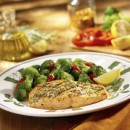
If you are planning on a dinner at the Olive Garden Italian Restaurant, you may want to consider trying the Herb-Grilled Salmon.

The dinner includes a salmon fillet that is seasoned with Italian herbs and extra-virgin olive oil. It also comes with seasoned broccoli.

Calories: 510

Total Fat: 26 g

Sodium: 760 mg

Carbohydrates: 5 g

Fiber: 2 g

This is a low calorie dinner, and one of the much healthier options to choose from when eating at the Olive Garden. I am not worried about the fat content, since Salmon and Olive Oil are full of very healthy fats that are actually good for your heart. This dish is a little high in sodium, which is due to the Italian herbs used to season the salmon. If you would like, ask if the amount of herbs used on the salmon can be reduced. It’s not a guarantee that the restaurant will be able to accommodate, but it doesn’t hurt to ask.

Image Credit: olivegarden.com

Feel free to follow us, however you like: Google+, FacebookTwitter, Pinterest

Tags: , , , , , , ,

Healthy 72 Hour Backpacks

In case of an emergency, it’s smart to plan ahead so you will have some basic supplies available to you and your family. You may decide you want more than just a 72 hour backpack, but the backpack is still a great way to help you get started with some emergency preparedness essentials.

You can buy your own 72 hour backpack that has most everything in it, but a lot of them come with unhealthy food (lots of sodium, sugar, etc.), so I have come up with a list of items you may want to include for you and your family.

The items listed below are meant for one adult.

Water

This is one of the most important things you can have in any emergency kit. You can survive up to three weeks without food, but you can only survive three days without water. Because you never know what you will need your 72 hour backpack for, it’s important that you prepare the best you can.

Plan on needing at least 8 cups (64 ounces) of water each day. Since this is for a 72 hour backpack (3 days), you should pack 24 cups (192 ounces) of water. If you can carry more water, that would be ideal.

Food

In the event of an emergency, you need to provide your body with as much nutrients as possible, versus loading up on sugar and sodium. Here are some ideas on what you may want to consider packing in your own 72 Hour Backpack.

• Fruit such as Raisins and Fruit Leathers that have no added sugars.

• Food Bars such as LaraBar® or CLIF® Bar

• Protein such as Jerky, Nutrition Bites, or unsalted mixed Nuts or seeds.

• Gum and/or Mints.

I have a reminder set for every six months so that I can rotate my food out before it expires. Buy food that you already eat and enjoy!

First Aid

You never know what you will need, so plan for the worst and hope for the very best. In addition to supplies, it would be helpful to have safety instruction as well, such as CPR training.

• Standard First Aid Kit

• Prescription Medications and Vitamins

Helpful Supplies

In addition to having a sturdy backpack that can carry everything, there are some supplies that you may want to consider packing in your 72 Hour Backpack, depending on space available and how heavy the items are.

• Flashlight

• Radio (battery operated )

• Batteries

• Flares

• Water-Proof Matches

• Whistle

• Dust mask

• Swiss Army knife

• Toothbrush and toothpaste

• Sturdy shoes, a change of clothes, and a warm hat

• Emergency Blanket

• Extra prescription eye glasses, hearing aid, or other vital personal items

Special Circumstances

If you have a child that is too young to carry their own backpack, make sure you include their food and water in your own 72 hour backpack.

Very young baby’s may need a formula and a bottle, or baby food available to them in case of an emergency. Plan ahead, and update your backpack to fit the needs of your families.

Get Started Today

You can start putting your 72 Hour Backpack together today. There are plenty of resources that can help you learn about what additional items you will want to add to your 72 Hour Backpacks. I just touched on mainly the food and water portion of the backpack, but there is so much more than is involved with putting your backpack together. Start small, and work your way up.

Feel free to follow us, however you like: Google+, FacebookTwitter, Pinterest

Tags: , , , , ,

Pedicure, anyone?

With Spring in full bloom and Summer on it’s way, I think it is about time women take out the nail polish and rock a beautiful pedicure. You deserve it.

Nail Polish 

Women seem to spend more time picking out the color they want rather than a brand of nail polish that will be safest for them to use. I know I have been guilty of this!

Ideally, you should choose an all natural nail polish  is water or mineral based rather than chemical based. This means  you would be buying nail polishes that don’t contain ingredients like dibutyl phthalates (DBP), which is an unhealthy chemical you will want to avoid.

Check out the nail polish from Go Natural®, a company that sells chemical free nail polish that is durable and chip-free. If you are looking for a nail polish that is geared towards girls, check out Piggy Paint®. They sell high quality nail polish that is non-toxic and provides plenty of colors to choose from.

Nail Polish Remover

Now that you use a non-toxic nail polish, it’s time to remove it once you are ready for a new color.

Try avoiding nail polish removes that that contain ingredients such as acetone, since it is a harsh chemical that dries out your nails and any skin that’s exposed to it.

You can try a natural nail polish remover such as the one from Honeybee Garden, which is enriched with horsetail extract to strengthen nails and fortified with vitamin E and aloe to soothe and protect cuticles. Another nail polish remover you can try is “Almost Natural” Nail Polish Remover by Miss, since it doesn’t have any acetone, ethyl acetate, or harsh odors. Also, it’s made with all organic ingredients.

Feel free to follow us, however you like: Google+, FacebookTwitter, Pinterest

Tags: , , , , , , , , ,