Posts Tagged ‘sugar’
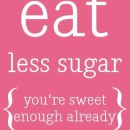
Eat Less Sugar!
For better health…eat less refined, processed, and artificial sugars! Craving something sweet? You can enjoy a delicious piece of fruit or make yourself a healthy (and still yummy!) treat. There are plenty of healthy forms of sugar you can use in your kitchen to satisfy your sweet tooth without causing harm to your health.
Not sure why refined, processed, and artificial sugars are bad for your health? I suggest reading Twinkie’s Challenge: No Sugar or Artificial Sweeteners.
Feel free to follow us, however you like: Google+, Facebook, Twitter, Pinterest, Instagram
Healthy Forms of Sugar

Ditch the refined and processed sugars for a much healthier alternative that will still satisfy your sweet tooth. You’ll soon learn that there are plenty of healthy forms of sugar for you to include in your diet!
Agave Nectar
Agave Nectar has a low glycemic index, allowing for sweetness without the negative side effects of sugar. Agave plants have Saponins, which has anti-inflammatory, immune system-boosting properties, even anti-microbial capability. Agave plants also have Fructans in it, which is believed to help lower cholesterol. Agave plants also have Inulin, which is a carbohydrate that many scientists believe helps with weight loss.
Barley Malt
Barley Malt comes from sprouted barley that is fermented, and has a sweet (about half as sweet as white sugar) and has a “malt” flavor.
Black Strap Molasses
Blackstrap Molasses is a sweetener that has many health benefits associated with it. Blackstrap Molasses comes from the process of refining sugar cane into white (table) sugar. Basically, all of the healthy stuff that’s no longer in white sugar, is in the blackstrap molasses. This sweetener has high amounts of manganese, copper, iron, and calcium.
Brown Rice Syrup
Brown Rice Syrup comes from soaking or cooking brown rice with enzymes to break down the starches into a sweet syrup.
Date Sugar
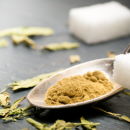
Date sugar comes from dried dates that have been ground into a powder. Date sugar doesn’t really melt or dissolve well into recipes, but still can be used in many recipes – or even as a sweet garnish.
Fruit
If you are in the mood for something sweet, you can always eat some delicious fresh fruit! You will satisfy your sweet tooth while enjoying the nutrients and fiber associated with the fruit(s) you are enjoying.
Maple Syrup
The sap coming from the maple trees are boiled down to make Maple Syrup. This sugar is significantly less processed compared to other sugars, and contains trace amounts of nutrients. I love Maple Syrup since it’s so full of flavor, but it’s used in moderation since it’s fairly high in calories.
Raw Honey
Raw honey isn’t processed, but it is minimally filtered. In it’s pure and raw state still in tact, you will be able to enjoy the maximum amount of honey’s natural antioxidants, vitamins, minerals, enzymes, and vital phytonutrients, where all the nutrients are still preserved.
Stevia Rebaudiana
Stevia is a herb that is sweeter than refined sugar but it’s calorie free and has no negative effect on the body’s production of insulin.
Xylitol
Xylitol is derived from fruits and vegetables (not the same thing as fructose). Most other forms of sugars are six-carbon sugars, which cause bacterial and fungi overgrowth. Xylitol, however, is a five-carbon sugar, making it an anti-microbial, which prevents the growth of bacteria.
Moderation
Even though there are many different types of healthy sugars available to you, sugar should still be consumed in moderation. Yes, you need sugar (from natural sources), but it’s not the only thing your body needs. Enjoy in moderation, just like anything else.
Feel free to follow us, however you like: Google+, Facebook, Twitter, Pinterest
Tags: glycemic index, Health, natural sweetener, Nutrition, sugar
“Low Calorie” doesn’t mean “Healthy”
Everyone seems to be obsessed with the term “low calorie”. Companies market their product as a “low calorie” meal or snack, which as a result, leads consumers to believe they are buying a healthy product. Unfortunately for us, “low calorie” doesn’t mean that it is “healthy”! This concept is a huge misunderstanding that I would like to clear up for everyone.
When Low Calorie doesn’t mean Healthy
I went searching for what consumers thought was a great low calorie snack for weight loss. Here are some of the most common low calorie snacks consumers suggested to others, and my suggestions of healthy alternatives.
•JELL-O Brand Gelatin and Pudding Snacks- The low calorie snack packs make this product easy to consume on a daily basis, which is concerning once you read the label and see what ingredients are listed in the product. They may be labeled as sugar-free and fat-free, but there are tons of artificial sweeteners and unhealthy ingredients you just shouldn’t be putting into your body.
Alternative- You can make your own Pudding using Dr. Oetker’s Organic Pudding mix. You can make a small batch and divide it into small serving size containers to enjoy throughout the week. This product still contains sugar, but I think this is a better alternative than the snack packs mentioned above, but still should be used only in moderation.
•Quaker® Rice Cakes - What’s not healthy about a low calorie snack that is gluten free containing 9 grams of whole grains in it? Lots of sugar and corn syrup. Once you add the sugar and corn syrup (among other things) to the healthy ingredients, it’s no longer healthy.
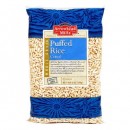
Alternative- If you are looking for a yummy whole grain, check out Arrowhead Mills® Organic Puff cereals. You will find that there is only one ingredient in this product, just how it should be! They taste fantastic plain or with your choice of milk.
•Popcorn- These are usually full of ingredients that are anything but real butter. Lots of chemically altered ingredients and additives.
Alternative- Buy popcorn with nothing added or make it yourself.
•Frozen Desserts- Consumers recommended Sugar-Free Fudgsicles, Low-Fat Ice Cream Bars from The Skinny Cow®, and Sugar-Free Ice Pops. Notice a common theme here? Companies are selling frozen desserts in small quantities and replace the sugar and/or fat with even more harmful artificial ingredients and tell you that they are now healthy because they have fewer amounts of calories. Sadly, a lot of consumers fall for this gimmick.
Alternative- I love Organic Blackberry Sorbet Bars by Julie’s Organic. Natural ingredients with no sugar or artificial sweeteners added. You can also try making your own healthy desserts, such as frozen grapes!
•Dannon Light ‘n Fit Non-Fat Yogurt- This is made with Splenda®, and goes along the same line as the gelatin and pudding snacks.
Alternative- All Natural Yogurt or Greek Yogurt with no added ingredients.
•100 Calorie Snack Packs- These low calorie snack packs were highly suggested by consumers, mainly due to taste and because it’s a “mindless alternative”. You can choose from cookies, crackers, and chips. Low calorie? Yes. Healthy? Not one bit. The company just provided small portions that are prepackaged and sold as low calorie. These products are full of sugar, which creates fat in your midsection. Not something you should do for fat loss, right?
Alternative- There are plenty of healthy crackers or other snacks to much on, without all of the processed ingredients, additives, and preservatives.
•Fiber One® Chewy Bars- Consumers suggested this low calorie snack because they taste like a candy bar. Not surprised, considering these snacks contain a lot of sugar and high maltose corn syrup (a sneaky way of adding a cousin of “high fructose corn syrup” into products).
Alternative- Looking for a chewy bar that tastes delicious? Check out all of the Fruit and Nut Bars by LÄRABAR®. Most of the flavors are made with healthy ingredients, with only six ingredients or less. The Pecan Pie flavor, for example, only has three ingredients; dates, pecans, and almonds. You wouldn’t believe these are healthy and low calorie once you taste how delicious these bars are.
•Campbell’s® Healthy Request® Soup- The soup may only have 90 calories per serving, but with two servings per can, most people are going to eat more than one serving. 180 calories still isn’t all that bad, but considering there are 410 mg of sodium per serving, that means you would be consuming 820 mg of sodium in just one serving. This soup may be marketed as “Heart Healthy”, but that still doesn’t make this soup healthy for you. It’s crazy how marketing works sometimes.
Alternative- Make your own homemade soup. Even if you buy an Organic or All Natural Soup with very few ingredients (think Amy’s Kitchen soups), you are still going to find more sodium than you bargained for.
Image Credits: arrowheadmills.com; larabarstore.com
Feel free to follow us, however you like: Google+, Facebook, Twitter, Pinterest
Tags: all natural, artificial ingredients, Dessert, gelatin, Healthy, Healthy Alternative, healthy snack, jell-o, Lara Bar, low calorie, low calorie snack, Nutrition, Organic, Popcorn, pudding snacks, snack, soup, sugar, USDA Organic
deluxe honeydrop™ Products
I am so excited to introduce to you healthy beverages that are new on the market! Since learning about the company’s origins, USDA Certified Organic products using simple yet beneficial ingredients, and learning how I can make my own adorable custom “bee tee”, I have recently become obsessed with this fabulous new company! The company is called deluxe honeydrop™, and I’m sure you are going to fall in love with their products as much as I have.
How it all started…
Cancer survivor David Luks developed deluxe honeydrop™ during cancer treatments at Sloan Kettering two years ago where he learned about the benefits of an organic lifestyle. With that knowledge, he decided to create a drink from the land, not the lab.
I got the idea for honeydrop in the wake of having survived cancer. One day, my nutritionist handed me an article about honey and honey’s many health benefits. The article explained that honey is a naturally sweet byproduct of pollination that contains antioxidants, minerals, and vitamins.
Like many of us, David realized that the brands that were promoting their use of honey in products were actually using mostly refined (white) sugar. This of course, defeats the purpose of trying to have a healthy beverage.
Luckily for you and me, David decided to create these healthy and delicious beverages for us – without adding sugar, corn syrup, or artificial products.
Healthy Beverages
Currently, deluxe honeydrop™ includes two organic honey infused organic juices and one organic tea. These beverages are comparable to drinks like Vitamin Water – except these are actually good for you. The beverages contain only 40 calories per serving (2 servings per 16.9 oz PBA-free, recycleable bottle) and each bottle has a spoonful of real honey from Brazil.
The flavors include:
Bee Calm – Chamomile, Tea & Honey
Bee Strong – Blueberry & Honey
Bee Alive – Blood Orange & Honey
Benefits of Honey
Honey protects against obesity and hypertension; it is lower on the glycemic index (64) relative to sugar (100), making it a more ideal sweetener for diabetics.
Honey is also a great alternative for athletes since it contains glucose and fructose; glucose burns slowly for lasting energy, and fructose burns fast for instant energy and performance.
Honey also naturally helps alleviate sore throats, and contains antioxidants, vitamins and minerals.
I seriously wonder why anyone would anyone want to use processed sugar over honey!
Where to Buy
This is still a relatively new product, so you will want to make sure that you find or request honeydrop™ beverages at your local grocery or health food store!
Right now, there are 125 Whole Foods stores across the country carrying deluxe honeydrop™ beverages, with more expansion planned in 2011.
Enjoy the delicious low calorie beverages, and let me know which one is your favorite – I know, hard to choose which one, right?!
Image credits: honeydrop.com
Feel free to follow us, however you like: Google+, Facebook, Twitter, Pinterest
Tags: antioxident, athlete, bee, beverage, Blood Orange, Blueberry, chamomile, David Luks, deluxe honeydrop™, diabetic, Fructose, glucose, Health, health food store, Healthy, healthy lifestyle, honey, honeydrop™, hypertension, low calorie, minerals, natural sugar, obesity, organic living, processed Sugar, product review, Sore Throat, sugar, sweetener, tea, USDA Organic, vitamins, Whole Foods
The Most Dangerous Diets

There are plenty of unhealthy ways to lose weight, and a Junk Food Diet is one of the worst ways you can lose weight. The concept is simple. As long as you consume fewer calories, you can eat unhealthy food and still lose weight.
A fairly new diet is the Ice Cream diet. The rationalization is that ice cream is a dairy product and has calcium in it. If you have enough calcium you won’t store extra fat. What the diet creator never tells you: ice cream is full of processed fats and sugar, which causes you to gain weight in all the wrong places.
Another common Junk Food diet is the Slim Fast Diet. Many people wouldn’t think that this a Junk Food, but when the first ingredient on the weight loss shake is “sugar”, I would consider this Junk Food. These shakes are basically a candy bar with a multi-vitamin injected into it.
Why it’s Dangerous: These diets consist of no nutritional value. Since the diet is based on few calories, you end up hungry most of the time and lack important nutrients that your body needs. This diet teaches us a very important principal: Not all calories are created equal.
The concept for these types of diets is to pick one healthy food, and consume it morning, noon, and night. Ever heard of the Cabbage Diet? What about the Watermelon Diet? There is a saying, “too much of a good thing, is bad”. The types of diet that only consist of one ingredient prove this adage true.
Why it’s Dangerous: Even though you may be eating something healthy all day, there just isn’t one ingredient that has all of the necessary vitamins and minerals that your body needs to function properly.
An interesting side effect of too much of the same food – even if it is healthy – is that you can actually start to build an allergy to the food. Certain food allergies can result in some dangerous side effects.
The low fat diet craze began in the 1980’s, and the diet consists of banning foods that contain any fat – including the healthy fat that is good for you. The result of this diet was low fat foods were created that consist of replacing fat with loads of sugar or sodium. The result of too much sugar and sodium is weight gain. How ironic.
Why it’s Dangerous: Your body needs healthy fats to absorb nutrients in the body, protect vital organs, store energy and keep you healthy. According to Dr. Joseph Mercola, healthy fats such as Omega-3 “helps fight and prevent heart disease, cancer, depression, Alzheimer’s, arthritis, diabetes, hyperactivity, and many other diseases”. Simply put, low fat diets are not a healthy way to lose weight.
There are plenty of popular low carb diets out there, thanks to diets like The Atkins Diet and The South Beach Diet. However, just because these low carb diets are popular, does not mean that they are healthy for you or proven to keep the weight off.
Why it’s Dangerous: Short term, you may end up losing weight. Like most diets out there, this is not a long term solution to weight loss, and can really end up hurting you in the long run.
Your body needs healthy carbohydrates to function. The lack of carbohydrates causes you to become weak and lethargic. This results in losing your ability to exercise. If you really want to lose weight, exercise is key to your success.
One of the extreme diets is the Tapeworm Diet. The concept of the diet is that you can eat anything you want, since the tapeworm inside your body eats most of the food. This is another extreme diet that encourages you to take desperate measures for you to continue to eat unhealthy, but still lose weight.
Another extreme diet is the HCG Diet. The diet consists of consuming the pregnancy hormone HCG while staying away from processed foods, sugar, carbohydrates and fat. On the diet, you are only allowed to consume 500 calories a day.
Why it’s Dangerous: The Tapeworm Diet is very dangerous because it can cause some very serious medical conditions. The tapeworm is a parasite that eats away at your food and even your essential organs. The diet has been known to cause nausea, fever, diarrhea, and even organ failure. No diet is worth destroying your own organs and landing you on an organ transplant waiting list.
While the HCG Diet’s weight loss results are astounding, there are dangerous side effects that come with consuming only 500 calories a day. There is no way for someone on the HCG diet to exercise, since they become extremely weak and lethargic. The HCG Diet can result in experiencing dizziness, passing out, and uncontrollable shaking. This is not a safe diet, and the only people that say it is safe, are the ones who are selling it.
Bottom Line: If you need to lose weight, don’t turn to dangerous diets. Eat a variety of healthy foods throughout the day, don’t starve yourself, and regularly exercise.
Feel free to follow us, however you like: Google+, Facebook, Twitter, Pinterest
Tags: dangerous, Dangerous Diets, diet, Diet Review, exercise, extreme diet, Healthy, Junk Food Diet, Lose Weight, low carb diet, low fat diet, Nutrition, one ingredient diet, Skinny, Slim Fast, sugar, Weight Loss